
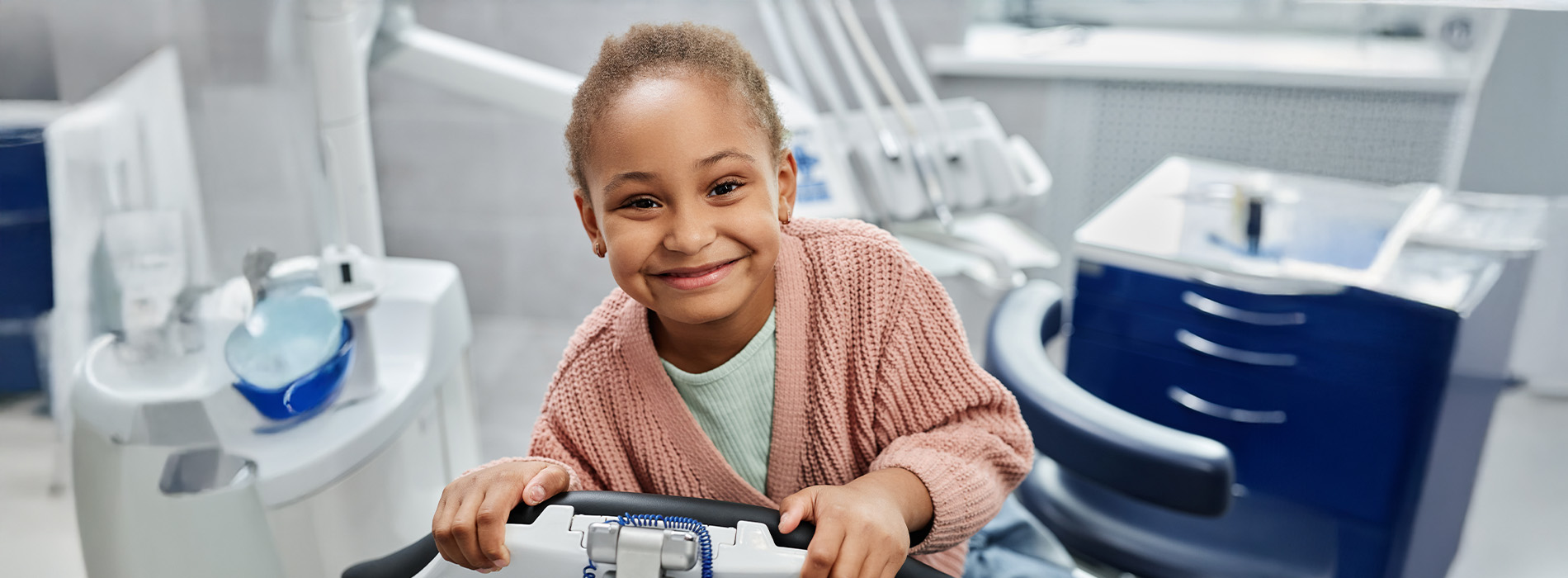
If your child has autism, you probably know that the dentist can feel like a lot: bright lights, unfamiliar smells, strange sounds, and people touching their mouth. For many families, “just open wide” isn’t realistic.
The good news is that dental care for kids with autism is very achievable with the right preparation, the right approach, and a team that listens to you. As a pediatric dentist, I’ve put together the strategies that make the biggest difference, both at home and in the dental chair.
Many children on the autism spectrum experience the world differently. In the dental setting, that can mean:
None of this means your child can’t have a healthy smile. It means the approach needs to be adjusted to fit your child.
Many people with autism thrive on routine. A simple picture-based sequence (toothbrush, toothpaste, brush top, brush bottom, rinse, done) shows what’s coming and when it ends. Pair it with a “first brush”, then a preferred activity cue. It may not be smooth at first but keep trying!
Two minutes is a long time when you’re uncomfortable. A sand timer, a brushing app, or a favorite two-minute song gives a clear endpoint, which can reduce resistance. Breaking it up into 1 minute intervals or 30 seconds at a time can help as well.
Let your child watch you or a sibling brush. Some kids benefit from practicing on a stuffed animal first or “brushing” a parent’s teeth.
Short, illustrated stories that walk through what brushing, or a dental visit, looks and sounds like can reduce anxiety. Reading one several times before an appointment helps a lot. We like to recommend watching Daniel Tiger goes to the dentist.
Tolerating the brush for five seconds longer is progress. Use praise and rewards that motivate your child.
Before any treatment, a short introductory visit lets your child explore the office, meet the team, and sit in the chair with no pressure and no exam required. Familiarity is one of the most powerful tools we have.
You are the expert on your child. Before the visit, tell us about:
Schedule when your child is typically at their best, whether that’s early morning or after a snack and a rest. Avoid times that overlap with naps, meals, or other stressful activities.
Show your child photos of the office and the dental team if available, read a social story, and practice “open wide” and counting teeth at home.
Techniques like tell-show-do (explain simply, demonstrate on a model or a finger, then perform) help a child know exactly what to expect. Clear, concise language and a calm tone matter more than long explanations.
Simple accommodations can make a big difference:
It’s better to complete one small step calmly than to push through everything and create a bad memory. Over a few visits, we can build up to a full exam and cleaning.
Some children need additional support for comfort and safety, especially for more involved treatment. A pediatric dentist can talk through options with you, including behavior guidance techniques and, when appropriate, other forms of anesthesia or sedation. This should always be a shared decision based on your child’s needs.
A good fit for a child with autism will:
At what age should a child with autism first see a dentist?
The same as any child: by the first birthday or when the first tooth appears. Starting early builds familiarity and comfort.
What if my child won’t open their mouth?
That’s okay. We start where your child is comfortable and build up gradually. Many kids need several short visits before an exam feels manageable.
Can I stay with my child during the visit?
Yes. Parents and caregivers are an important part of the team, and your presence can be reassuring.
Is sedation always necessary?
No. Many children with autism do well with preparation, patience, and a sensory-friendly approach. Sedation is considered only when appropriate, and we’ll always discuss the options with you first.
At Tiny Trips Pediatric Dentistry in Frederick, MD, we believe every child deserves a positive dental experience, at their own pace. If your child has autism or other special needs, we’d love to hear about them and plan a visit that works for your family.
Schedule an appointment today or call us at 301-631-5970 to get started.
Quick Links
Our Hours
Kids' dental emergency?
Don't wait.